
21 September 2026
Identifying Common Flat Roof Problems in North Wales
Spring is the ideal time to check your flat roof for winter damage. From standing water to surface cracks, we explain how to spot early signs of failure.
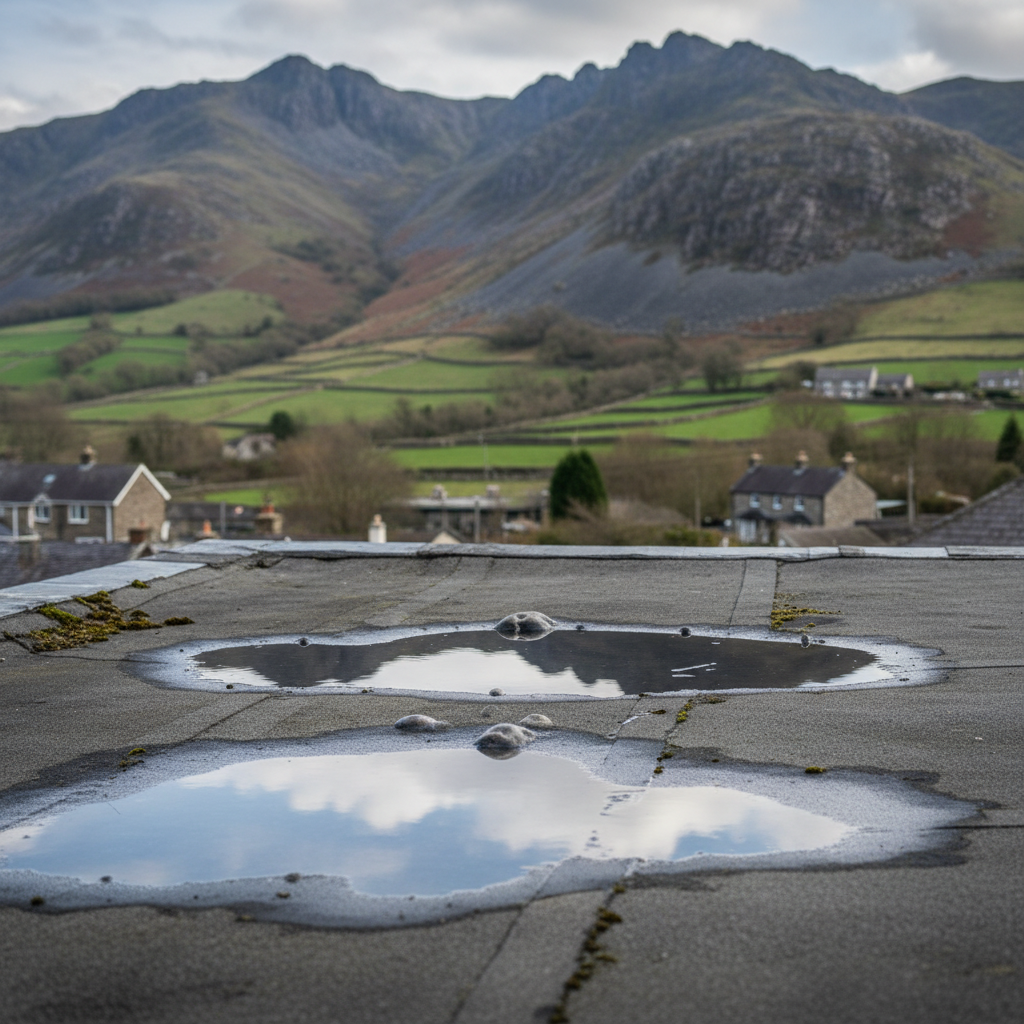
In North Wales, flat roofs take a beating. From the salt air in Conwy to the relentless rain rolling off the Carneddau, the local climate puts immense pressure on felt, EPDM, and GRP systems. As we move into spring, the shift in temperature often reveals flat roof problems that stayed hidden during the colder months. Early detection is the difference between a simple repair and a full replacement.
The danger of ponding water
Ponding is perhaps the most frequent issue our team encounters. This occurs when water sits on the roof surface for more than 48 hours after rainfall. While modern membranes are designed to be waterproof, they aren't meant to be submerged indefinitely. The weight of standing water can cause the roof structure to deflect, creating a deeper depression that collects even more water.
In towns like Bethesda and Llanberis, where rainfall is high, ponding can lead to the deterioration of the roof membrane and accelerated UV damage at the water's edge. If you notice large puddles that refuse to drain, it often points to an issue with the initial fall of the roof or blocked outlets.
Blistering and 'sun-baking'
As the spring sun begins to warm up roofs in Anglesey and Gwynedd, you might notice small bubbles or blisters forming under the surface. This is usually caused by trapped moisture within the roof build-up. When the sun heats the roof, this moisture turns to vapour and expands, lifting the membrane.
While a few small blisters might not seem urgent, they are a sign of underlying dampness. If walked upon, these blisters can easily puncture, leading to an immediate leak. It is vital not to pop these yourself; instead, the source of the moisture needs to be identified and addressed by a professional.
Splits, cracks, and surface failures
Flat roof materials have a finite lifespan, and the cycle of freezing and thawing over a North Wales winter causes materials to expand and contract. Over time, this leads to fatigue. You should look out for:
- Splitting: Long cracks often found near the edges or joints of the roof.
- Crazing: A network of fine cracks on the surface, common in older GRP (fibreglass) roofs.
- Alligatoring: The bitumen surface cracking into a pattern resembling reptile skin due to UV exposure.
- Failed Flashing: The seals around chimneys or where the roof meets a wall are often the first place a leak starts.
Thermal movement and structural stress
Flat roofs are susceptible to thermal movement. Because they are often large, dark surfaces, they absorb a significant amount of heat. In spring, the temperature swing between a sunny afternoon and a frosty night can be significant. Without proper detailing and high-quality materials, the roof can pull away from the perimeter, leading to gaps that allow water to bypass the membrane entirely.
Need help with your roof?
Identifying flat roof problems early is the best way to protect your property and your investment. If you have noticed standing water, cracks, or signs of damp on your ceiling, Sion Owens Roofing Limited can help. Our Bethesda-based team provides expert assessments across Gwynedd, Anglesey, and Conwy. We are CHAS accredited and offer a workmanship guarantee of up to 20 years on our installations. Contact us today to request a free, no-obligation quote for your roofing project.