19 October 2026
Lead Flashing vs Alternatives: The Best Choice for Your Roof
Is traditional lead still the gold standard for North Wales roofs? We compare lead flashing against modern alternatives like Ubiflex and Wakaflex to help you decide.
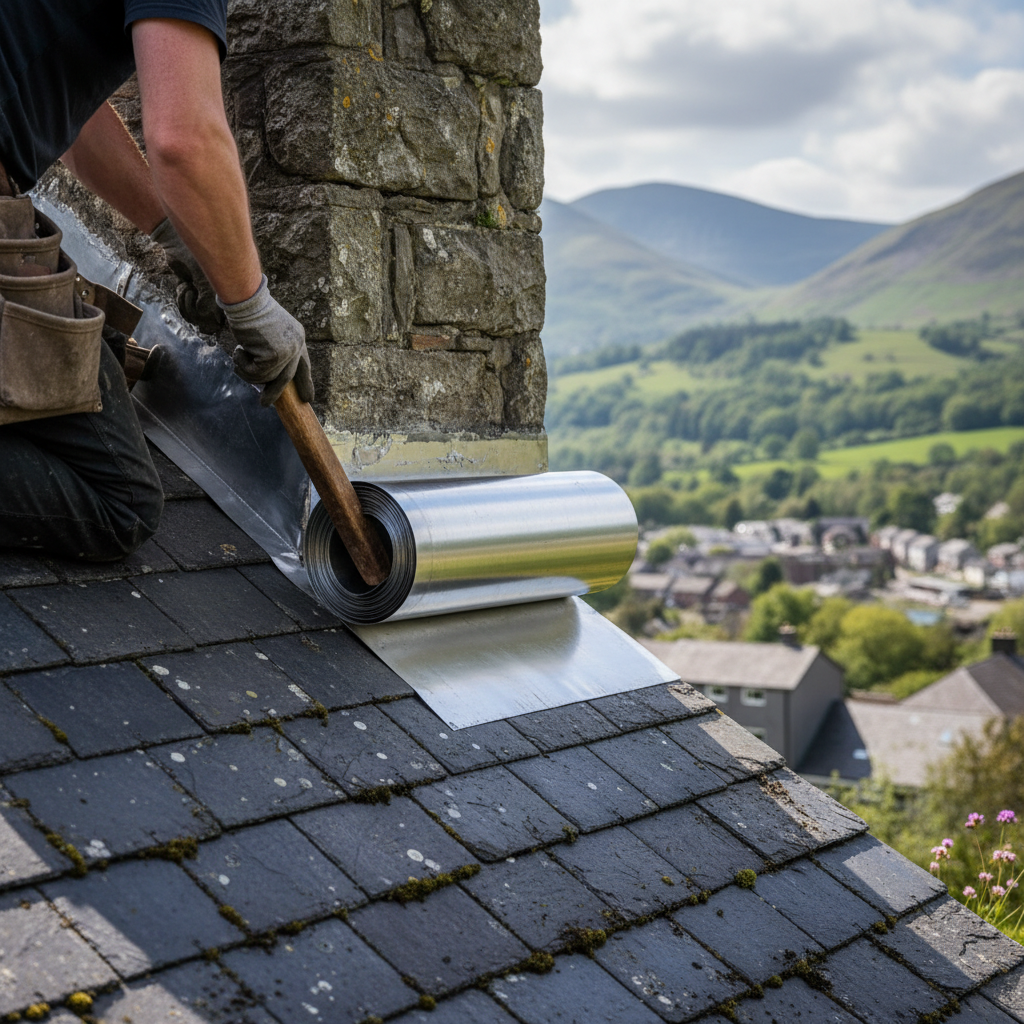
When it comes to keeping a property watertight, the junctions where your roof meets a wall, chimney, or valley are the most critical points. For centuries, lead has been the primary material used to bridge these gaps. However, as modern roofing technology evolves, homeowners in areas like Gwynedd and Conwy are increasingly asking about lead flashing vs alternatives. Whether you are restoring a traditional slate cottage in Bethesda or maintaining a modern build in Llandudno, choosing the right flashing material is essential for long-term protection against the Welsh weather.
The Case for Traditional Lead Flashing
Lead has remained the industry standard for hundreds of years for good reason. At Sion Owens Roofing, we frequently install leadwork on heritage properties and listed buildings across North Wales because it offers a level of longevity that synthetic materials struggle to match. When installed correctly by a skilled craftsman, lead flashing can easily last over 60 years, and often over a century.
One of the main advantages of lead is its weight and malleability. In the high winds we experience around the Snowdonia foothills, lead stays put. It can be bossed or dressed into complex shapes around chimney stacks and uneven stone walls, providing a bespoke fit that prevents water ingress. Furthermore, for those living in conservation areas or owning traditional Welsh slate roofs, lead is often the only material that satisfies planning requirements and maintains the aesthetic integrity of the property.
Understanding Modern Lead Alternatives
Despite the dominance of lead, several modern alternatives have gained popularity, such as Ubiflex, Wakaflex, or various bitumen-based adhesive flashings. These products are typically made from a combination of aluminium mesh and synthetic rubber or modified polymers. They are designed to mimic the performance of lead while addressing some of its perceived drawbacks.
- Weight: Modern alternatives are significantly lighter than lead, which can make them easier to transport and handle on-site.
- Theft Prevention: Because lead has a high scrap value, it can unfortunately be a target for theft. Synthetic alternatives have no resale value, making them a safer choice for isolated buildings or low-level roofs.
- Installation Speed: Many alternatives come with adhesive backings, which can speed up the installation process in certain scenarios.
- Non-Toxic: While lead is perfectly safe when handled and installed correctly, some homeowners prefer synthetic options to avoid any environmental concerns regarding lead run-off.
Performance in the North Wales Climate
When comparing lead flashing vs alternatives, the local climate is a deciding factor. North Wales is subject to heavy rainfall and intense coastal winds. Lead is naturally UV resistant and does not become brittle over time. Some cheaper synthetic alternatives can degrade after 15 to 20 years of exposure to the sun and extreme temperature fluctuations, leading to cracks and leaks.
However, high-quality non-lead flashing systems are now engineered to perform remarkably well. They are particularly useful for rapid repairs or on modern extensions where the structural weight of lead might be a concern. The choice often comes down to the specific architecture of your home and how long you intend the repair to last.
Which is Right for Your Roof?
If you own a period property or a house with a traditional Welsh slate roof, lead is almost always the superior choice. It complements the natural stone and provides a lifetime of service. The initial cost of lead is often higher than synthetic options, but when amortised over its 60+ year lifespan, it is frequently the most cost-effective solution.
On the other hand, for a lean-to extension, a shed, or a property in an area where lead theft is a known issue, a high-quality modern alternative can provide a reliable, watertight seal. At Sion Owens Roofing, we assess every project individually, considering the pitch of the roof, the exposure to the elements, and the building's history before making a recommendation.
Need help with your roof?
Whether you require traditional leadwork bossed to perfection or a modern synthetic flashing solution for a new project, our team is here to help. We are CHAS accredited and offer a workmanship guarantee of up to 20 years on our installations. Contact Sion Owens Roofing today to discuss your requirements and request a free, no-obligation quote for your property in North Wales.