
7 September 2026
Welsh Slate Roof Lifespan: How Long Does a Slate Roof Last?
A Welsh slate roof is often called a 'hundred-year roof', but what actually determines its lifespan in the harsh North Wales climate? We look at the facts.
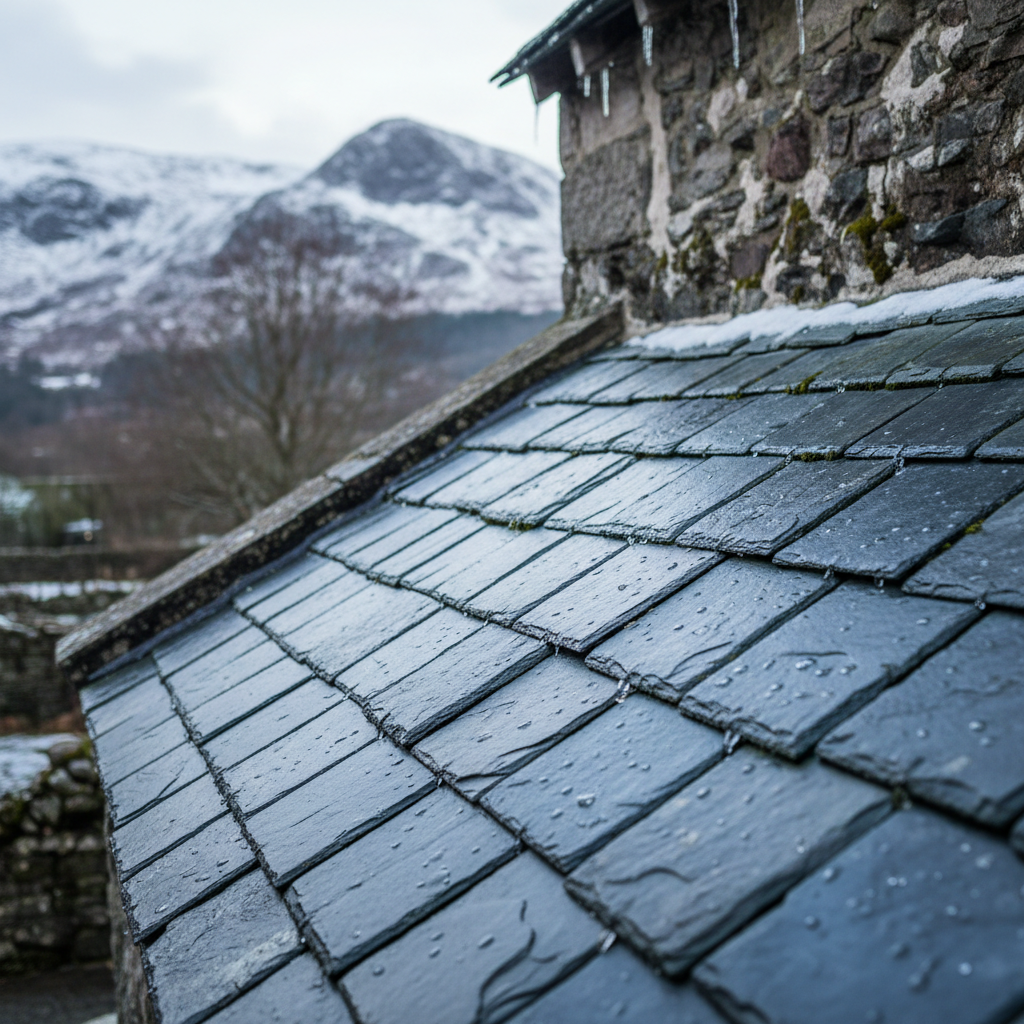
When people talk about a Welsh slate roof lifespan, they often refer to it as a 'hundred-year roof'. In the valleys of Gwynedd and across the coastline of Anglesey, it is common to see homes still protected by the same slate that was laid during the Victorian era. However, while the stone itself is incredibly durable, the overall longevity of a roof depends on more than just the quality of the rock.
The durability of Welsh slate
Welsh slate, particularly the blue and purple varieties sourced from local landmarks like Penrhyn Quarry in Bethesda, is globally recognised as the finest roofing material available. Unlike cheaper imported alternatives, genuine Welsh slate is remarkably dense and has a low water absorption rate. This means it is almost entirely resistant to the freeze-thaw cycles that can cause lower-quality tiles to delaminate or crack during a typical North Wales winter.
When installed correctly, the slate tiles themselves can easily last 75 to 100 years, and in many cases, significantly longer. The issue for most homeowners isn't the slate failing, but the components holding them in place.
What shortens the lifespan of a slate roof?
While the slate might be eternal, the rest of the roof structure is not. In our experience working across Conwy and Snowdonia, we typically see three main factors that lead to a roof needing attention before the slate has reached its limit:
- Nail Sickness: Historically, slates were often fixed with iron or steel nails. Over 60 to 80 years, these nails corrode until they snap, causing slates to slip. This is often the primary reason a roof needs to be stripped and re-slated, even if the slates themselves are still in good condition.
- Battens and Felt: The timber battens and the underlying felt (or sarking) are prone to rot if moisture gets trapped. Once the timber structure softens, the integrity of the whole roof is compromised.
- Incorrect Installation: A roof is only as good as the leadwork and the fixing. Poorly flashed chimneys or valleys will lead to leaks long before the slate fails.
Maintaining longevity in North Wales
The weather in North Wales is a significant factor. High winds off the Irish Sea and heavy rainfall in the mountains mean that any loose slates should be addressed immediately. Small gaps allow wind to get under the roof covering, which can lead to larger sections being lifted during winter storms. Regular inspections, especially on older or listed buildings, are essential to ensure that minor issues like a slipped slate don't turn into structural timber rot.
Can slates be reused?
One of the unique benefits of Welsh slate is its recyclability. When our team performs a strip-and-re-slate project, we often find that a high percentage of the original Bethesda or Llanberis slates are still perfectly sound. By cleaning them and re-fixing them with modern copper or stainless steel nails and high-quality breathable membranes, we can often give those original materials another century of life. This is not only cost-effective but vital for maintaining the heritage aesthetic of our local towns.
Need help with your roof?
If you are concerned about slipped slates or want to know the current condition of your property, our team can provide a professional assessment. Sion Owens Roofing Limited offers a 20-year workmanship guarantee and is fully insured to work on all types of slate roofs across North Wales. Contact us today to request a free, no-obligation quote for your roofing project.